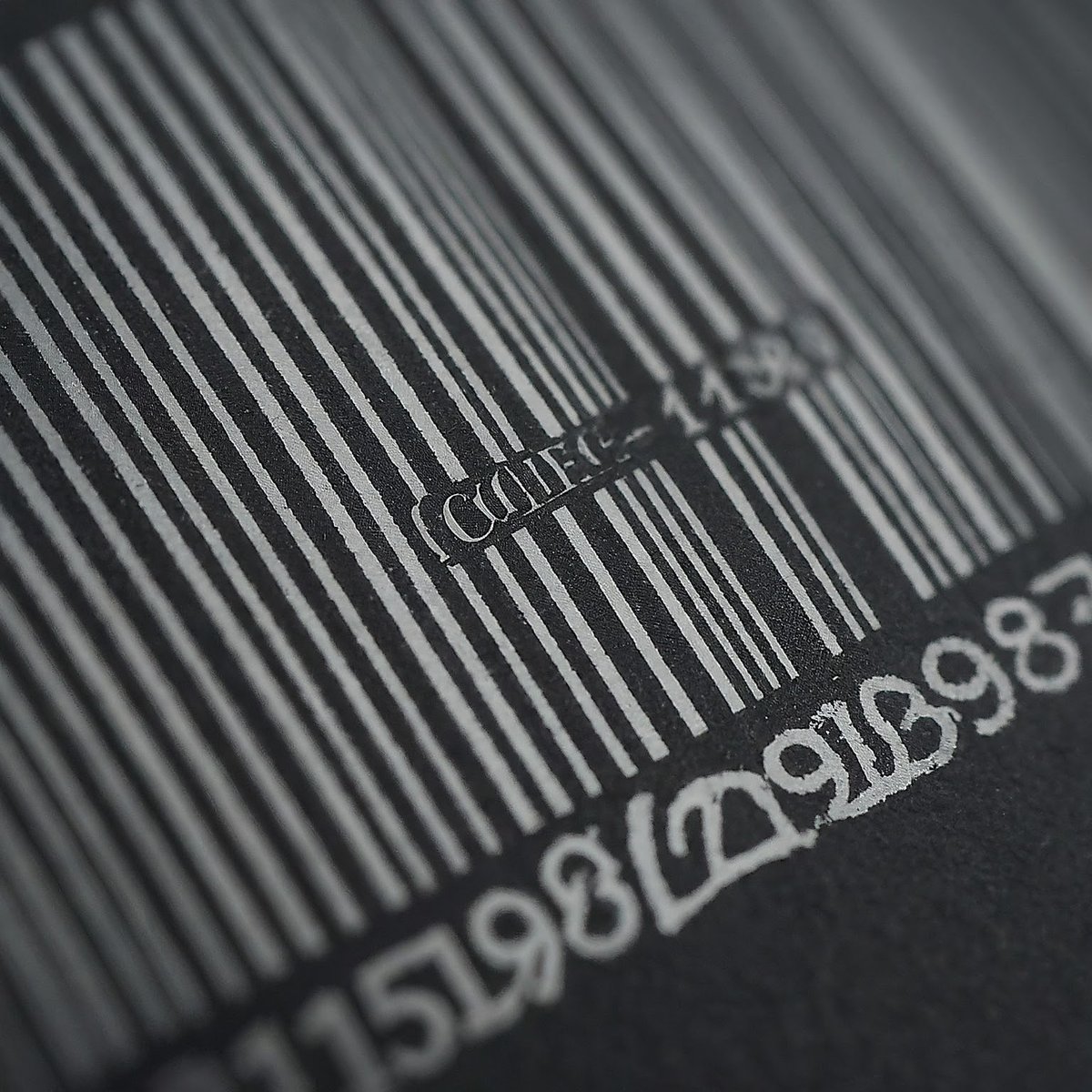
When you think of barcodes, you might picture a simple string of lines on a product, a silent workhorse of inventory and checkout. But behind that unassuming pattern lies a sophisticated world of data encoding, especially with symbologies like Code 128. Dive into the realm of Advanced Code 128 Topics and Standards, and you'll quickly discover a robust system critical to modern supply chains, healthcare, and logistics. It's not just about putting data into bars; it's about optimizing, standardizing, and securing that data for seamless global operations.
At a Glance: Mastering Code 128's Deeper Dimensions
- Code 128 isn't just one code: It leverages three distinct code sets (A, B, C) to efficiently encode the full ASCII character set, including numbers, letters, and control characters.
- Automatic optimization is key: Barcode encoders intelligently switch between these code sets to achieve the highest data density possible, minimizing the physical size of the barcode.
- Beyond the basic scan: Specialized standards like GS1-128, ISBT 128, and SSCC-18 build on Code 128, adding structured "application identifiers" to define the meaning and format of encoded data.
- Quality dictates readability: Print quality, proper quiet zones, and the "X-dimension" (the narrowest bar's width) are paramount for reliable scanning in real-world environments.
- Encoding vs. Encryption: While Code 128 efficiently encodes data, it does not encrypt it. Protecting sensitive data represented by a barcode requires separate encryption standards like AES.
- International standards govern everything: ISO/IEC 15417:2007 defines Code 128, ensuring global interoperability, while other ISO/IEC standards cover print quality and verification.
Unpacking Code 128: More Than Meets the Eye
At its core, Code 128 is a marvel of efficiency. Unlike simpler barcodes, it’s a high-density linear symbology capable of encoding the entire 128-character ASCII set. This means it can represent everything from basic alphanumeric strings to complex control characters, making it incredibly versatile. Its formal name, ANSI/AIM 128, USS Code 128, or Uniform Symbology Specification Code 128, reflects its widespread adoption, but the real magic lies in its internal structure and the global standards it underpins.
The official blueprint for Code 128 is laid out in ISO/IEC 15417:2007. This international standard isn't just a suggestion; it's the bedrock that ensures a Code 128 barcode generated in one country can be accurately read and interpreted anywhere else in the world. It dictates everything from the physical characteristics of the bars and spaces to the precise mathematical formula for its check digit, guaranteeing data integrity.
The Anatomy of an Advanced Barcode
Every Code 128 barcode symbol you encounter follows a strict structure: a leading quiet zone, a Start character, the data characters themselves, a calculated Code 128 check digit, a Stop character, and a trailing quiet zone. Think of the quiet zones as essential "breathing room" for the scanner, allowing it to accurately detect the start and end of the symbol. The Start and Stop characters, along with the check digit, are vital for machine readability but aren't typically displayed in the Human Readable Interpretation (HRI) you see below the bars.
What truly sets Code 128 apart is its use of three distinct code sets:
- Code Set A: This set handles uppercase alphanumeric characters, common punctuation, and a range of control characters (like tab, enter, etc.). It’s ideal for system commands or purely administrative data.
- Code Set B: Offering more flexibility, Code Set B includes both uppercase and lowercase alphanumeric characters, along with most punctuation and seven special characters. It's often the default for mixed-case text.
- Code Set C: When you need to encode long strings of numbers, Code Set C is your ally. It encodes 100 digit pairs (00-99) per symbol character, effectively doubling the data density for numeric data. This is where Code 128 shines for high-volume numeric identifiers.
Mastering Code Sets: When and Why to Switch
Understanding how and when Code 128 switches between its A, B, and C code sets is crucial for generating the most efficient and compact barcodes. While modern barcode generator software often handles this optimization automatically, knowing the mechanics empowers you to troubleshoot or make informed decisions for niche applications.
The Power of Code Set Switching
An efficient Code 128 encoder constantly evaluates the input data to determine the optimal code set. For instance, if your data starts with ABC123XYZ, an encoder might begin in Code Set B. However, if it encounters a long string of digits like 1234567890, it will likely switch to Code Set C to encode those numbers more compactly (two digits per character instead of one). This dynamic switching is managed by special "Shift" and "Code Set Change" characters that are part of the symbology, silently embedded within the barcode.
Consider the difference: encoding "12345" in Code Set B would require five data characters. In Code Set C, it could be encoded as two pairs (12, 34) and then potentially a single 5 (requiring a switch back to A or B for the last digit, or a special odd-length numeric encoding). The goal is always to reduce the total number of symbol characters, thereby shrinking the physical barcode and improving scan speed.
Function Characters: The Hidden Commands (FNC1, FNC2, FNC3, FNC4)
Beyond simple data encoding, Code 128 incorporates special "Function Characters" (FNC) that act as instructions for scanners or define the structure of the data.
- FNC1: This is perhaps the most important function character, particularly for GS1-128 applications. FNC1 typically indicates that the barcode conforms to the GS1 data structure, often serving as a field separator for variable-length Application Identifier (AI) data. For a scanner, FNC1 often signals the end of a variable-length data field or prompts it to transmit the data followed by a group separator.
- FNC2: Used to link multiple barcodes. If a scanner encounters an FNC2, it may interpret the following data as a link to another barcode, allowing for the concatenation of information from several symbols.
- FNC3: Reserved for specific industry applications, often related to scanner programming or special functions. Its interpretation can vary depending on the scanner's firmware and configuration.
- FNC4: This character extends Code 128's capability to include characters from the extended ASCII character set (characters 128-255, based on ISO/IEC 8859-1). If your data includes characters like
ñ,é, orß, FNC4 is the mechanism to encode them, effectively expanding Code 128 beyond its standard 128 ASCII characters.
Understanding these function characters is crucial when designing systems that leverage Code 128 for complex data capture and interpretation.
Specialized Code 128 Applications: The Standards That Build On It
Code 128's flexibility has made it a foundational symbology for numerous industry-specific standards. These "application standards" define not just how the data is encoded in the bars, but also what the data means, using structured formats built upon Code 128's robust framework.
GS1-128: The Global Supply Chain Standard
Perhaps the most ubiquitous advanced application of Code 128 is GS1-128 (formerly known as UCC/EAN-128). This standard is the backbone of supply chain communication across retail, logistics, and manufacturing. It's not a different barcode type, but rather a specific way of structuring data within a Code 128 barcode using Application Identifiers (AIs).
AIs are two-to-four-digit numeric prefixes that explicitly define the meaning and format of the data that follows them. For example:
(01)indicates a Global Trade Item Number (GTIN).(10)signifies a Batch or Lot Number.(17)denotes an Expiration Date.(21)identifies a Serial Number.
When a scanner reads a GS1-128 barcode, it doesn't just see a string of characters; it parses the AIs to understand that(01)12345678901234(17)231231(10)ABC123means: GTIN 12345678901234, Expiration Date December 31, 2023, and Lot Number ABC123. The FNC1 character plays a crucial role here, often acting as a separator for variable-length fields, ensuring accurate parsing.
Implementing GS1-128 requires careful attention to data formatting, as incorrect AI usage or missing FNC1 characters can lead to misinterpretation, disrupting entire supply chains.
ISBT 128: Ensuring Safety in Blood and Tissue Products
In the critical healthcare sector, ISBT 128 stands as a global standard for the identification, labeling, and information transfer for blood, cell, and tissue products. Built on Code 128 (and Data Matrix for 2D applications), ISBT 128 employs a highly structured data dictionary to ensure patient safety and product traceability from donor to recipient.
Each segment of data, like the Donation Identification Number, product code, ABO/Rh blood group, and expiration date, is encoded with specific identifiers and checksums to prevent errors. The strict adherence to ISBT 128 guidelines is non-negotiable, as mislabeled or untraceable products can have severe, even fatal, consequences. Its robust design is a testament to Code 128's ability to support life-critical applications.
SSCC-18: Tracking Goods in Transit
The Serial Shipping Container Code (SSCC-18) is another powerful application of Code 128, primarily used in logistics and shipping. An SSCC is an 18-digit number that uniquely identifies a logistics unit, such as a pallet, carton, or any grouping of trade items that needs to be managed for transport and storage.
The SSCC barcode, using the (00) Application Identifier from GS1-128, provides a single, scannable identifier for an entire shipping unit. This allows for efficient tracking and tracing throughout the shipping process, from warehouse to final delivery. When a logistics unit arrives at a receiving dock, scanning the SSCC-18 barcode quickly provides access to all relevant information about its contents, eliminating the need to open and inspect each individual package.
Optimizing Code 128 Barcode Generation and Printing
A barcode is only as good as its readability. Even the most perfectly encoded data is useless if a scanner can't read the symbol. This is where advanced considerations for generation and printing come into play.
The Critical X-Dimension and Quiet Zones
The X-dimension refers to the width of the narrowest bar or space in your barcode. This single measurement dictates the overall size of the barcode and is crucial for scanner compatibility. A smaller X-dimension means a denser barcode, allowing more data in a smaller space, but it also demands higher print resolution and more precise scanning equipment. A larger X-dimension creates a bigger barcode but is more forgiving to print imperfections and can be read from greater distances.
Equally important are the quiet zones, the clear areas surrounding the barcode. For Code 128, the leading and trailing quiet zones must be at least 10 times the X-dimension in width. These zones provide contrast and signal the scanner where the barcode begins and ends. Neglecting quiet zone requirements is a common pitfall that often results in "no-reads" or scanning errors.
Print Quality and Verification: The ISO/IEC Standards
Printing barcodes isn't just about putting ink on paper; it's about precision. Factors like ink spread, print head resolution, substrate quality, and printer calibration all affect barcode quality. Poor print quality can lead to:
- Decodability issues: The scanner struggles to interpret the bar/space patterns.
- Symbol contrast issues: Insufficient contrast between bars and spaces.
- Edge roughness: Irregularities on bar edges that confuse scanners.
To ensure consistent, high-quality barcodes, industry relies on ISO/IEC 15416 for linear barcode print quality specification and ISO/IEC 15426-1 for barcode verifier compliance. A barcode verifier is a specialized device that measures various parameters of a printed barcode (e.g., contrast, decodability, modulation) and assigns it a grade (typically A to F or 4.0 to 0.0). Regular verification is a non-negotiable step in mission-critical applications to prevent costly downstream errors.
Generating Advanced Code 128 Barcodes
When you need to create Code 128 barcodes that adhere to these advanced standards—whether it's managing code set switching, integrating FNC characters, or structuring GS1-128 data—specialized tools are indispensable. These tools handle the intricate logic of the symbology, ensuring compliance with ISO/IEC 15417 and facilitating the generation of scannable, accurate barcodes. For those looking to implement these capabilities, it's essential to use reliable software that understands the nuances. You can streamline this process significantly when you Generate Code 128 barcodes using purpose-built applications.
Beyond the Scan: Securing Data Encoded by Barcodes
It's crucial to understand a fundamental distinction: Code 128 is an encoding standard, not an encryption standard. It organizes data into a machine-readable format. The data itself, once encoded, is openly visible to anyone with a scanner or even a basic understanding of the symbology. If the data represented by your barcode is sensitive—such as patient IDs, financial information, or proprietary product details—then separate, robust encryption methods must be applied to protect that data, typically at the database or transmission level.
Understanding AES: A Powerful Encryption Standard
This is where technologies like the Advanced Encryption Standard (AES) come into play. While completely separate from Code 128 itself, AES is the benchmark for securing the information that might be referenced or contained within a barcode system. Established by the US National Institute of Standards and Technology (NIST) in 2001, AES (originally Rijndael) is a symmetric-key algorithm, meaning the same key is used for both encryption and decryption. It's the successor to the older Data Encryption Standard (DES) and has become a global standard for protecting electronic data.
AES works by performing a series of complex transformations on fixed blocks of 128 bits of data. The strength of the encryption depends on the key length:
- 128-bit keys: Provide 10 rounds of transformation.
- 192-bit keys: Involve 12 rounds.
- 256-bit keys: Execute 14 rounds of transformation, offering the highest level of security.
The US National Security Agency (NSA) has approved AES for protecting classified information, with 192 or 256-bit keys required for TOP SECRET data. Its underlying design, a substitution–permutation network, involves steps like KeyExpansion (deriving round keys), AddRoundKey (XORing data with a round key), SubBytes (non-linear byte substitution), ShiftRows (cyclically shifting rows), and MixColumns (combining column bytes). These steps collectively ensure that every bit of plaintext affects many bits of ciphertext, making it incredibly difficult to break without the correct key.
Despite theoretical "breaks," no practical attack currently exists that can decrypt data protected by a correctly implemented full AES without knowing the key. For instance, even the best known key-recovery attacks for AES-256 would require an astronomically high number of operations (2^254.3), making them computationally infeasible with current technology. While AES-128 and AES-192 offer some resilience, AES-256 is generally considered more resistant to potential quantum computing attacks. Modern CPUs often include AES-NI instructions, allowing for high-speed encryption and decryption, achieving multiple GiB/s throughput.
Why Encrypt Data Associated with Barcodes?
Imagine a barcode on a pharmaceutical product that links to a database containing patient medical history, or a shipping label that, if compromised, reveals sensitive logistical plans. While the barcode itself doesn't contain the full sensitive data, the identifier it encodes is the key to accessing it. This makes the underlying database and communication channels ripe targets.
Implementing AES (or other strong encryption methods) protects these backend systems. It ensures that even if an unauthorized party gains access to the database or intercepts data during transmission, the information remains unintelligible without the decryption key. This layered security approach—using Code 128 for efficient data identification and AES for data protection—provides a comprehensive solution for handling sensitive information.
Common Challenges and Pitfalls in Advanced Code 128 Implementations
Even with a deep understanding of Code 128, real-world implementations can present unique challenges. Proactive awareness of these pitfalls can save significant time and resources.
- Data Truncation or Misinterpretation: This is particularly common with GS1-128. If an FNC1 is missing or misplaced, or if the scanner isn't configured to correctly parse Application Identifiers, a long string of data can be read as a single field, leading to incorrect inventory or shipping records. Always test your entire data string with your specific scanners and software.
- Ignoring the Human Readable Interpretation (HRI): While the barcode is for machines, the HRI is for humans. Ensure it's clear, readable, and matches the encoded data. In emergencies or when a scanner fails, the HRI becomes vital for manual data entry.
- Inadequate Print Quality: A visually perfect barcode might still fail to scan reliably if print quality metrics (like quiet zone reflectivity, contrast, or edge sharpness) are out of specification. Investing in regular barcode verification and maintaining printer calibration is critical, especially in high-volume environments.
- Mismatch Between Scanner Configuration and Barcode Encoding: Many advanced Code 128 features, such as FNC4 for extended ASCII or specific GS1-128 parsing rules, require the scanner to be configured correctly. A generic scanner setup might not correctly interpret these advanced elements, leading to "bad reads" or garbled data.
- Over-optimizing Density at the Expense of Robustness: While Code Set C offers high numeric density, pushing the X-dimension too small to achieve a tiny barcode can make it susceptible to minor print defects or ambient lighting issues. Balance density with the practical scanning environment.
Navigating the Future of Barcoding and Data Standards
Code 128, despite being a linear (1D) symbology, continues to hold immense relevance in a world increasingly dominated by 2D codes like QR Codes and Data Matrix. Its enduring power lies in its established presence, its efficiency for specific data types, and its foundational role in critical industry standards. While 2D codes offer higher data capacity and error correction, Code 128 often remains the preferred choice for its simplicity, fast scanning performance, and the maturity of its implementation across countless systems globally.
The standards built upon Code 128, such as GS1-128 and ISBT 128, are not static. They continually evolve to meet new industry demands, security challenges, and technological advancements. Staying abreast of updates from organizations like GS1 and ICCBBA (International Council for Commonality in Blood Bank Automation) is essential for anyone operating within these ecosystems. The seamless flow of goods and information relies heavily on this commitment to consistent, well-governed data standards.
Your Next Steps for Mastering Code 128
Mastering advanced Code 128 topics isn't about memorizing every detail, but about understanding the principles and knowing where to find the answers. If your operations rely on precise data capture and supply chain efficiency, consider these actionable steps:
- Deep Dive into Your Application Standard: If you're using GS1-128, ISBT 128, or SSCC-18, invest time in thoroughly understanding their specific implementation guides. These documents clarify AI usage, data formatting rules, and sector-specific requirements.
- Invest in Quality Barcode Generation and Verification: Use reputable software for generating barcodes and establish a robust quality control process using barcode verifiers. This proactive approach prevents costly errors down the line.
- Regularly Test Your Scanning Infrastructure: Ensure your scanners and parsing software are correctly configured to interpret all the nuances of your Code 128 barcodes, especially if you're using function characters or specific data structures.
- Evaluate Your Data Security Posture: For any sensitive data referenced by your barcodes, ensure you have strong encryption (like AES) and data protection measures in place. Remember, Code 128 encodes; it doesn't secure.
- Stay Informed: Follow updates from organizations like ISO, GS1, and relevant industry bodies to keep your systems compliant and efficient. The world of data standards is dynamic, and continuous learning is key.
By embracing these advanced topics and standards, you're not just creating barcodes; you're building a more robust, efficient, and secure data ecosystem for your operations.