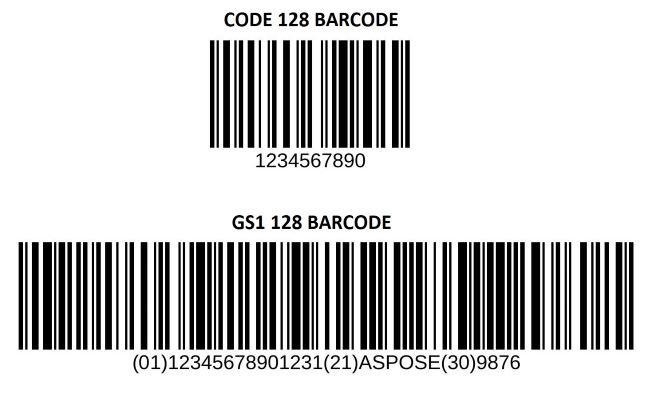
In today's fast-paced world, every package shipped, every product scanned, and every medical specimen tracked relies on a tiny, striped image: the barcode. Among the most powerful and flexible of these is Code 128. It's the silent workhorse behind countless logistical triumphs, but have you ever stopped to wonder how Code 128 barcode generators work to create these essential digital identifiers?
It’s more than just drawing lines; it’s a sophisticated process of data interpretation, encoding, and precise image generation that ensures your barcode is not only visually correct but also universally scannable and reliable. Let’s pull back the curtain and explore the meticulous steps these generators follow to bring your data to life.
Code 128 Generators: At a Glance
- High-Density & Versatile: Code 128 encodes all 128 ASCII characters, making it highly flexible for diverse data types.
- Intelligent Encoding: Generators automatically choose the most efficient character sets (Code 128A, B, or C) for your data.
- Error Prevention: A built-in check digit algorithm ensures data integrity and reduces scanning errors.
- Precision Matters: Generators meticulously control bar widths, quiet zones, and overall dimensions for optimal scannability.
- Real-World Applications: Widely used in logistics, inventory, healthcare, and manufacturing due to its reliability and density.
- Beyond the Image: Quality generation involves understanding technical specs, system integration, and regulatory standards.
The Unsung Hero of Modern Logistics: What is Code 128?
Imagine a barcode that can pack a lot of information into a small space, handle almost any text you throw at it, and virtually eliminate errors. That's Code 128. Developed in 1981, this linear (1D) barcode symbology quickly became a favorite for its high data density and remarkable versatility, capable of encoding the full 128 ASCII character set—everything from numbers and uppercase letters to lowercase characters and special symbols.
It's the barcode you'll find on everything from shipping labels to inventory tags, a testament to its reliability and adaptability. Its core advantages—high data density, comprehensive character support, built-in error detection, and flexibility—make it an indispensable tool for operations where space is at a premium and accuracy is paramount. While some might think of what a barcode is as simple black and white lines, Code 128 showcases the sophisticated engineering behind these everyday marvels.
Peeling Back the Layers: The Anatomy of a Code 128 Barcode
Before we dive into how a generator works, it’s helpful to understand the basic structure it creates. A Code 128 barcode isn't just a random arrangement of bars; it's a precisely defined sequence designed for maximum readability and data integrity.
Each character within a Code 128 barcode is represented by three bars and three spaces, totaling 11 modules (a module being the narrowest element). These bars and spaces vary in width, creating the unique patterns that scanners read.
Here’s what every generator must assemble:
- Quiet Zones: Essential blank margins at the beginning and end, typically 10 times the width of the narrowest bar (X-dimension). These quiet zones tell the scanner where the barcode starts and stops.
- Start Character: A unique pattern indicating the beginning of the barcode and, crucially, which sub-symbology (A, B, or C) the barcode initially uses.
- Data Characters: The encoded information itself, translated into bar and space patterns.
- Check Character: A non-data character derived from a calculation of all preceding data characters. This is the barcode's built-in error detection system, catching most common scanning errors.
- Stop Character: A specific pattern marking the end of the barcode, always followed by a final bar.
This intricate structure allows for efficient data storage and robust error checking, making Code 128 highly reliable.
The Triple Threat: Understanding Code 128's Sub-symbologies (A, B, C)
One of Code 128's most powerful features, and a key element for any generator, is its ability to switch between three distinct character sets, or sub-symbologies, to optimize data encoding. A smart generator doesn't just pick one; it dynamically switches between them to achieve the highest possible density for your specific data.
- Code 128A: Best suited for encoding uppercase letters (A-Z), numbers (0-9), and ASCII control characters (like tab, carriage return, line feed). This set is less common for general data but vital for specific applications requiring control codes.
- Code 128B: The general-purpose champion. It handles all numbers (0-9), uppercase (A-Z) and lowercase (a-z) letters, and a broad range of special characters. If you have mixed alphanumeric data, Code 128B is often the default choice.
- Code 128C: The speed demon for numeric data. This set encodes pairs of digits (00-99) as a single barcode character. This doubles the data density for purely numeric strings, making it incredibly efficient for numbers-heavy applications like tracking numbers or quantities.
A Code 128 barcode can seamlessly switch between these A, B, and C sets using special "shift" and "code" characters. Modern barcode generators are exceptionally intelligent at this, analyzing your input data and automatically determining the most efficient sequence of sub-symbologies to minimize the barcode's physical length while maximizing its data capacity. This dynamic optimization is a core component of how barcode generation works at a sophisticated level.
Behind the Scenes: How Code 128 Barcode Generators Work Step by Step
Now, let's get to the heart of it. A Code 128 barcode generator isn't simply a drawing tool; it's a sophisticated piece of software designed to perform a series of complex calculations and translations to produce a scannable image. If you're looking for a Code 128 Barcode Generator, understanding these steps illuminates its inner workings.
Here’s the step-by-step process:
1. Data Input and Optimization
The generator's first task is to accept your raw data—be it a product ID, a tracking number, or a serial code. The magic truly begins here. The generator doesn't just blindly encode; it intelligently analyzes the entire string of characters.
- Character Set Analysis: It scans your data to identify patterns. Are there long strings of numbers? Mixed alphanumeric? Control characters?
- Sub-symbology Selection: Based on this analysis, the generator determines the most efficient sequence of Code 128A, B, or C sub-symbologies. For instance, if you input "ABC12345XYZ", it might start with Code 128B for "ABC", switch to Code 128C for "12345" (encoding "12" and "34" as single characters, then "5" as a single character or switching to B for the last digit), then switch back to Code 128B for "XYZ". The goal is to use the fewest possible barcode characters, resulting in a shorter, more compact barcode. This dynamic switching is often invisible to the user but crucial for optimal density.
2. Character Encoding
Once the optimal sub-symbology path is charted, the generator translates each character (or pair of digits in Code 128C) into its unique bar and space pattern. Each pattern consists of three bars and three spaces, with specific widths that add up to 11 modules. For example, the number '0' in Code 128B has a distinct pattern of varying bar and space widths.
3. Check Digit Calculation
This is where error detection is built in. The generator calculates a single "check character" based on a specific algorithm that uses a weighted sum of the values of all the data characters in the barcode.
- Weighting: Each data character, including the start character, is assigned a numerical value and multiplied by its position (its "weight").
- Summation: These weighted values are summed up.
- Modulo Operation: The total sum is then divided by 103 (a prime number specific to Code 128), and the remainder becomes the check character.
This check character is appended to your data, and its unique bar/space pattern is generated. When a scanner reads the barcode, it performs the same calculation. If its calculated check character matches the one encoded in the barcode, it knows the data was read correctly. If not, it flags an error.
4. Adding Start and Stop Characters
The generator then frames your encoded data and check character with the appropriate start and stop characters. The start character also indicates the initial sub-symbology (e.g., Start Code A, Start Code B, or Start Code C). The stop character always includes a final narrow bar to signal the absolute end of the barcode.
5. Module Assembly & Barcode Image Generation
Now, all these bar and space patterns are strung together. The generator takes these digital representations and converts them into a visual image.
- X-dimension: It determines the 'X-dimension,' which is the width of the narrowest bar or space. This is critical as all other bar and space widths are multiples of the X-dimension. A common X-dimension for general use might be 10-30 mils (thousandths of an inch).
- Bar Widths: The generator then draws the bars and spaces with precise widths based on their encoded patterns and the chosen X-dimension (e.g., a "wide" bar might be 2 or 3 times the X-dimension).
- Barcode Height: It applies a standard or user-defined height, typically between 0.1 and 0.5 inches, ensuring scanners can easily capture the entire barcode.
- Resolution: For print, the generator outputs a high-resolution image (e.g., 300+ DPI) to ensure crisp, clean edges for accurate scanning.
6. Quiet Zone Application
Finally, the generator adds the required quiet zones—the blank space—before the start character and after the stop character. This critical white space prevents scanners from misinterpreting surrounding text or graphics as part of the barcode. A minimum quiet zone of 10 times the X-dimension is standard.
7. Output
The end result is a high-quality digital image (e.g., a JPEG, PNG, SVG, or EPS file) or a direct print command, ready for labels, packaging, or documents. The generator has successfully transformed your alphanumeric data into a scannable, error-resistant Code 128 barcode.
The Blueprint for Perfection: Key Technical Parameters for Quality
A top-tier Code 128 barcode generator understands that the digital image is just the first step. For a barcode to function perfectly in the real world, several technical parameters must be meticulously controlled during generation and printing. These are the critical details that distinguish a merely "printable" barcode from a truly "scannable" and reliable one:
- X-dimension (Module Width): This is the fundamental unit. It dictates the overall size of the barcode. A smaller X-dimension means a denser barcode, but it requires higher print resolution and better scanner optics. Generators allow you to set this based on your printing capabilities and scanning environment.
- Barcode Height: While the data is encoded horizontally, adequate height is crucial for easy scanning. A standard recommendation is a height-to-width ratio of 15% of the barcode's total length, or at least 0.25 inches. Generators let you adjust this for optimal scanning.
- Quiet Zones: As mentioned, these clear areas before and after the barcode are non-negotiable. A generator must ensure a minimum of 10 times the X-dimension is reserved, as insufficient quiet zones are a common cause of scanning errors.
- Bar Width Ratio: The ratio between narrow and wide bars (e.g., 2:1 or 3:1) must be precise. Any deviation due to poor printing or generation can lead to misreads.
- Print Contrast: Not directly controlled by the generator's image output, but the assumption of high contrast (minimum 80% between bars and spaces) is built into the symbology. The generator creates the distinct black and white; actual contrast depends on ink and substrate.
- Print Quality & Resolution: While generators produce crisp digital files, the final printed output depends on the printer. High-resolution printers (300+ DPI recommended) are crucial to accurately reproduce the fine details of Code 128 bars and spaces, preventing jagged edges or "fuzziness" that confuse scanners.
A good generator will either enforce these parameters or provide clear warnings and options to configure them, empowering you to create barcodes that meet industry standards.
Code 128 in Action: Where It Shines and How It Compares
Code 128's versatility and reliability have cemented its place across numerous industries. Understanding its applications and how it stacks up against other symbologies highlights why it's such a popular choice. This versatility is part of [placeholder_link slug="how barcodes work"] for different businesses.
Primary Applications
- Logistics & Supply Chain: From tracking individual packages (think FedEx, UPS, USPS tracking numbers) to managing pallets and customs documentation, Code 128 is a backbone of global shipping.
- Inventory Management: Identifying SKUs, bin locations, and assets in warehouses and retail environments, streamlining stock control and order fulfillment.
- Manufacturing: Tracking work-in-process, components, and finished goods, enabling quality control and comprehensive batch/lot traceability.
- Healthcare: Vital for patient identification on wristbands, medication administration, laboratory specimen labeling, and blood product tracking (e.g., ISBT 128, a specific application of Code 128).
- Retail: Used for internal inventory, pricing, and sometimes for product identification where EAN/UPC aren't mandated.
- Document Management: Encoding crucial identifying information on files, records, and internal mail.
The Big Picture: Code 128 vs. Other Barcodes
When choosing a barcode, it's essential to understand its strengths relative to alternatives. Code 128 often stands out for its flexibility. If you're exploring different types of barcodes, Code 128 will invariably be a significant contender.
- vs. Code 39: Code 128 is the clear winner for density and character support. Code 39 (also known as Code 3 of 9) can only encode uppercase letters, numbers, and a few special characters, and it takes up more space to do so. Code 128 handles the full ASCII set and packs more data into a smaller area, making it preferred for space-limited applications.
- vs. UPC/EAN: UPC (Universal Product Code) and EAN (European Article Number) are fixed-length, numeric-only barcodes primarily designed for retail point-of-sale. Code 128, in contrast, offers variable length, full ASCII support, and is application-agnostic, suitable for internal tracking where UPC/EAN's specific structure isn't needed.
- vs. GS1-128: This is a crucial distinction. GS1-128 is not a different barcode symbology; it's a specific application standard for Code 128, governed by GS1. It uses Code 128 to encode specific data structures defined by "Application Identifiers" (AIs), like '01' for a GTIN (Global Trade Item Number) or '10' for a batch/lot number. It also requires the FNC1 control character to indicate it's a GS1-128 barcode. Generators can produce both generic Code 128 and GS1-128 compliant barcodes, understanding [placeholder_link slug="what GS1 is all about"] is key for supply chain applications.
- vs. 2D Barcodes (QR Code, Data Matrix): While 2D barcodes like QR Codes can store significantly more data (thousands of characters) and are omni-directionally scannable, Code 128 remains prevalent for simpler data needs. It's faster to read with linear scanners, has lower printing resolution requirements, and benefits from extensive legacy system compatibility. Often, hybrid approaches use Code 128 for a primary ID and a 2D barcode for supplementary data.
Building Trust: Validation and Security in Code 128 Barcodes
The reliability of Code 128 isn't just a claim; it's built into its design and supported by rigorous industry standards. This focus on accuracy is a cornerstone of how barcode systems function in critical environments.
Check Character Validation: The First Line of Defense
As we discussed, the generator calculates and embeds a check character. This simple yet effective mechanism provides immediate error detection during scanning. If a scanner misreads even a single bar or space, the recalculated check character won't match the encoded one, and the scanner will alert the user to a "no-read" or "misread." This prevents bad data from entering your systems, catching single-digit substitutions and most transposition errors.
Barcode Verification Standards: Grading for Quality
Beyond simple scannability, there's print quality. International standards like ISO/IEC 15416 and ANSI X3.182 define how linear barcodes should be graded. These standards assess various parameters (print contrast, modulation, defects, decodability, quiet zone) and assign a grade (A-F).
- Impact on Generators: While a generator produces the ideal digital image, it's designed to meet these standards if printed correctly. Understanding these grades (e.g., a C grade or better is typically required for shipping labels) helps you specify the print quality needed when configuring your generator and printer.
- Verification Systems: After generation and printing, dedicated barcode verifiers (different from scanners) optically analyze printed barcodes and assign a quality grade. This "implementation validation" ensures that what the generator produced, and the printer output, meets real-world performance expectations.
Implementation Validation: Testing in the Trenches
The best generator in the world can still falter if its outputs aren't tested in the actual environment. This involves:
- Testing with Actual Equipment: Scan your generated barcodes with the exact scanners you'll use in production.
- Varying Conditions: Test under different lighting, distances, and angles.
- End-to-End System Testing: Ensure the scanned data correctly flows into your business systems.
- Quality Control: Establish checkpoints to regularly verify barcode quality in production.
This multi-layered approach ensures that your Code 128 barcodes are not only accurately generated but also reliably scannable and trustworthy throughout their lifecycle.
Navigating the Terrain: Best Practices & Common Challenges
Generating Code 128 barcodes is just one piece of the puzzle. Effective implementation requires strategic thinking, anticipating pitfalls, and integrating the barcodes seamlessly into your operations.
Best Practices for Optimal Code 128 Implementation
- Design Considerations:
- Human-Readable Text: Always include the encoded data in a human-readable font below the barcode. This serves as a critical fallback if the barcode is damaged or unscannable.
- Size Matters: Adjust barcode size (X-dimension and height) based on the scanning environment. Smaller items need denser barcodes; larger items or long-distance scanning require bigger barcodes.
- Durability: Consider the environment. For harsh conditions, use durable label media, coatings, or laminations to protect the barcode from abrasion, moisture, or chemicals.
- Standardized Placement: Consistent placement on products or documents significantly speeds up scanning and reduces errors.
- Data Structure Standardization:
- Consistent Delimiters: If encoding multiple data fields (e.g., part number, lot number, date), define and consistently use delimiters (like spaces, tabs, or special characters) so your systems can parse the data correctly.
- Standard Formats: Establish clear rules for data formats (e.g., all dates YYYYMMDD, all part numbers 8 digits). Inconsistent data is a generator's and a scanner's worst enemy.
- Document Everything: Create clear guidelines for how data is structured and barcodes are generated and applied.
- Integration with Business Systems:
- Database Design: Ensure your databases are designed to store and manage the data encoded in your Code 128 barcodes.
- Workflow Mapping: Integrate barcode scanning into your operational workflows. Define what happens at each scan point and how data updates systems.
- Exception Handling: Plan for scenarios where barcodes are damaged, unreadable, or contain incorrect data.
- Staff Training: Proper training for staff on scanning techniques, barcode handling, and system usage is crucial for success.
Common Implementation Challenges and Solutions
- Data Formatting Issues:
- Challenge: Inconsistent data structures, special characters causing encoding problems, or data exceeding practical length limits.
- Solution: Develop strict data validation rules. Use your generator's advanced features to preview how data is encoded and optimize character set switching. Implement robust testing protocols.
- Printing and Production Challenges:
- Challenge: Poor print quality (fading, smudging, low contrast, "voids"), environmental factors (heat, cold, moisture affecting labels), or incorrect media selection.
- Solution: Invest in quality printers (300+ DPI or higher), appropriate label stock, and ribbons. Implement a barcode verification system (a verifier, not just a scanner) to regularly check print quality. Adjust X-dimension to suit printer capabilities.
- Integration with Legacy Systems:
- Challenge: Older scanners may not be compatible, existing databases might have constraints, or current processes might not adapt well to barcode workflows.
- Solution: Phase in implementation gradually. Conduct thorough compatibility testing. Consider middleware solutions to bridge gaps between old and new systems. Adapt processes incrementally with staff involvement.
By proactively addressing these areas, you can ensure your Code 128 implementation is robust, efficient, and delivers a strong return on investment.
Beyond Today: The Future of Code 128
While new technologies emerge, Code 128 isn't fading away. Its fundamental strengths ensure its continued relevance, even as it adapts to evolving trends:
- 2D Barcode Integration: We're seeing more hybrid approaches. A Code 128 might provide a primary ID (like a product number), while a companion QR Code or Data Matrix offers extensive supplementary information (batch details, URLs, maintenance logs). Generators will increasingly support generating these alongside each other.
- Mobile Scanning Evolution: As mobile phones become ubiquitous scanning tools, Code 128 generation will continue to optimize for camera-based scanning. This means ensuring good print contrast, sufficient quiet zones, and appropriate sizing for various mobile device optics.
- RFID and Barcode Coexistence: Radio-Frequency Identification (RFID) offers non-line-of-sight tracking, but barcodes like Code 128 still provide visual identification, a crucial human-readable backup, and a cost-effective solution for many applications. They will continue to coexist, each serving distinct purposes in a comprehensive tracking strategy.
Code 128's adaptability, coupled with continuous improvements in generation and scanning technology, ensures its vital role in the future of automated identification.
Strategic Investments: The Costs and Returns of Code 128
Implementing Code 128 isn't without cost, but the investment often yields significant returns through enhanced efficiency and reduced errors. Understanding these financial aspects helps in planning your barcode strategy.
Equipment Investments
- Printers: High-resolution thermal transfer or direct thermal printers are essential for quality output.
- Scanners: Handheld, fixed-mount, or mobile device scanners are needed to read the barcodes.
- Verification Devices: Optical verifiers are crucial for ensuring print quality meets industry standards.
- Label Media: The cost of labels, tags, and ribbons, chosen for durability and printability.
Software and Integration
- Barcode Generation Software/Libraries: Licensing costs for dedicated software or integration fees for libraries within existing systems.
- Database Modifications: Costs for updating or integrating databases to store and retrieve barcode data.
- Integration Services: Professional services to connect barcode systems with ERP, WMS, or other business applications.
Operational Considerations
- Training: Investing in staff training for generating, printing, applying, and scanning barcodes.
- Process Redesign: Time and resources to adapt existing workflows to incorporate barcode usage.
- Maintenance & Quality Control: Ongoing costs for printer maintenance, label inventory, and quality assurance checks.
Return on Investment (ROI)
The ROI for a well-implemented Code 128 system typically stems from:
- Reduced Errors: Significant drop in manual data entry errors.
- Improved Efficiency: Faster data capture, quicker inventory counts, accelerated shipping processes.
- Enhanced Traceability: Better tracking of products, assets, and components throughout the supply chain.
- Better Customer Service: Accurate order fulfillment and faster issue resolution.
By reducing operational costs and improving accuracy, Code 128 barcode systems often pay for themselves quickly.
Staying Compliant: Legal & Regulatory Landscape
While Code 128 is a public domain symbology, its application often falls under various legal and regulatory umbrellas. Being aware of these ensures your implementation is compliant and secure.
- Industry-Specific Requirements:
- GS1 Standards: Crucial for retail and supply chain, defining how Code 128 is used (GS1-128) for global trade item numbers, batch/lot, expiration dates, etc.
- FDA UDI: For medical devices in the US, requiring unique device identification often encoded in Code 128 or 2D barcodes.
- Track & Trace: In pharmaceuticals, Code 128 is often used to meet serialization requirements.
- Aerospace (ATA Spec 2000) & Automotive (AIAG): Specific industry guidelines for part marking and tracking.
Your Code 128 generator should be capable of meeting these precise encoding rules. - Data Privacy Considerations:
- Encoded Information: Be mindful of what data you encode. While the barcode itself isn't readable by humans, the underlying data might be sensitive.
- Human-Readable Form: Determine what information is appropriate to display in human-readable form alongside the barcode.
- Data Processing Security: Ensure your systems that process and store barcode data adhere to regulations like GDPR, CCPA, or HIPAA.
- Intellectual Property Awareness:
- Symbology: Code 128 itself is public domain.
- Software & Implementations: Be aware of licensing for specific barcode generation software, patents for specialized scanning or printing technologies, and trademarks for branded packaging that includes barcodes.
Navigating these considerations is crucial for a legally sound and secure Code 128 implementation.
Your Action Plan: Getting Started with Code 128 Barcodes
Ready to harness the power of Code 128 for your operations? Here's a concise, actionable guide to help you get started, from defining your needs to optimizing your system.
1. Define Your Requirements with Precision
Before you generate a single barcode, clearly outline your needs. What specific data do you need to encode (e.g., product IDs, serial numbers, dates, quantities)? Where will these barcodes be used (e.g., shipping labels, asset tags, patient wristbands)? What kind of scanning equipment do you already have or plan to acquire? How will the barcode data integrate with your existing systems? A clear understanding here saves countless headaches later.
2. Design Your Data Structure for Clarity
Once you know your data, design how it will be organized within the barcode. Determine the content format for each field (e.g., 'date' as YYYYMMDD, 'product ID' as alphanumeric). If encoding multiple data points in one barcode, establish consistent field delimiters (e.g., using a space, tab, or a special character like a caret). Document these standards rigorously; consistency is paramount for reliable scanning and system integration.
3. Select Your Tools Wisely
Choose the right barcode generation software or programming library that fits your scale and integration needs. Consider factors like ease of use, ability to handle dynamic sub-symbology switching, and output formats. Simultaneously, select appropriate scanning equipment, printing methods (e.g., thermal transfer for durability), and, crucially, barcode verification tools to ensure quality from the outset.
4. Implement a Pilot Program
Don't go live all at once. Start small with a pilot program. Generate and print a limited set of barcodes, apply them in a controlled environment, and test them thoroughly with your actual scanning equipment. This phase is critical for testing readability, validating data flow into your systems, and gathering feedback from end-users before a full rollout.
5. Scale Gradually and Systematically
Address any issues identified during the pilot program. Refine your processes, provide comprehensive training to all staff involved, and thoroughly document every step. As confidence grows, gradually expand the implementation to other departments or products. Establish ongoing quality control checkpoints to monitor barcode generation and print quality regularly.
6. Monitor and Optimize for Continuous Improvement
Barcode implementation isn't a one-time event. Continuously monitor key performance indicators (KPIs) like scanning accuracy, processing speed, and error rates. Gather user feedback to identify areas for improvement. Stay updated on advancements in barcode technology and software, and don't hesitate to refine your implementation to maintain peak efficiency and adapt to changing business needs.
By following these steps, you can confidently integrate Code 128 barcodes into your operations, unlocking efficiencies and enhancing accuracy across your entire workflow.