In a world where supply chains stretch across continents and consumer expectations for transparency are higher than ever, the humble barcode has evolved far beyond a simple price tag. If you're looking to gain deeper visibility into your inventory, streamline logistics, and enhance product traceability, then understanding Code 128 barcodes is no longer optional – it's a strategic necessity. This sophisticated symbology empowers businesses to embed critical, detailed information directly onto their products and packaging, transforming how goods move from manufacturer to consumer.
Think of it as the advanced language of the supply chain, capable of communicating far more than just a product ID. From tracking a specific batch of juice boxes to pinpointing the exact expiration date of pharmaceuticals, Code 128 and its specialized variant, GS1-128, are the unsung heroes making modern logistics both efficient and resilient.
At a Glance: Why Code 128 & GS1-128 Matter
- Data-Rich: Carries more information than traditional UPCs, including alphanumeric characters.
- Highly Versatile: Can encode various data types, from product identifiers to serial numbers and dates.
- Essential for Logistics: Key for tracking and tracing products at carton, pallet, and shipping container levels.
- Boosts Traceability: Critical for recall preparedness, inventory management, and supply chain transparency.
- Industry Standard: Widely adopted by major retailers, distributors, and trading partners globally.
- Foundation for GS1-128: The general Code 128 forms the basis for the more structured GS1-128, which adds specific rules for GS1 data.
Beyond the Beep: What is Code 128 Barcode Symbology?
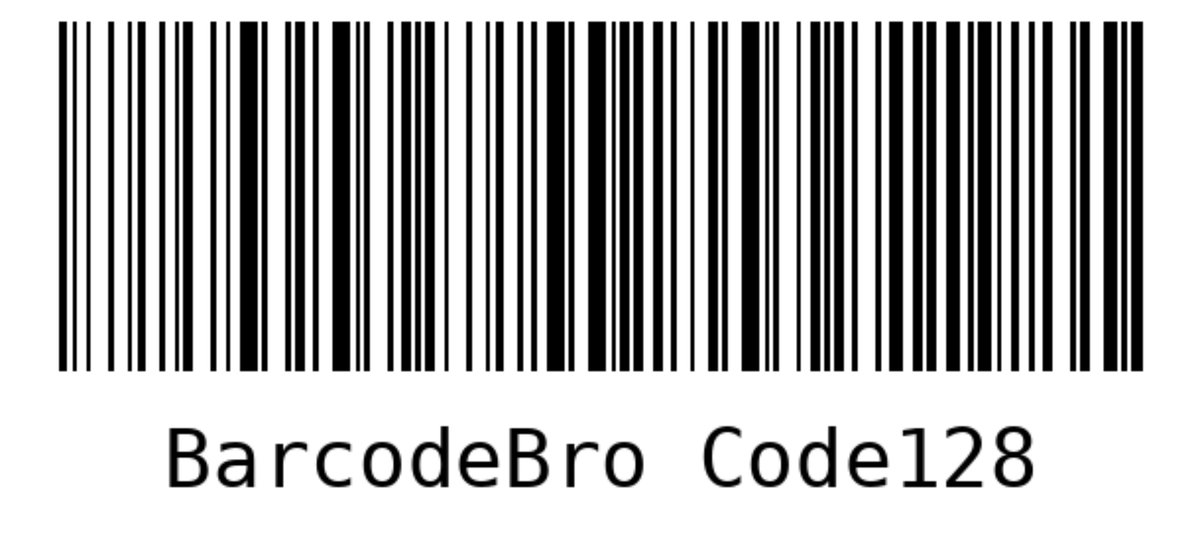
Before we dive into its more specialized applications, let's understand the foundational technology. Code 128 is a high-density, alphanumeric linear barcode symbology. That's a mouthful, but it simply means it can store a lot of different types of information – letters, numbers, and even special characters – in a relatively small space, arranged in a single line.
Developed in 1981, Code 128 was designed to be robust and flexible. Unlike its predecessors, which often had limited character sets (like only numbers for UPC-A), Code 128 uses three different character sets (A, B, and C) that can be switched mid-barcode. This clever design allows it to optimize space, encoding the maximum amount of data in the most compact form possible. It’s what gives it the power to handle the complex data strings required in today's intricate supply networks.
The Specialized Powerhouse: Demystifying GS1-128 Barcodes
While Code 128 is a general-purpose tool, its most impactful application in logistics comes through its specialized subset: the GS1-128 barcode. Previously known as UCC-128, the GS1-128 takes the robust foundation of Code 128 and layers on a standardized structure dictated by GS1, the global organization for supply chain standards. This structure is what truly unlocks enhanced traceability.
Think of Code 128 as the English language, and GS1-128 as a very specific dialect with a strict grammar and vocabulary. This "dialect" ensures that everyone in the supply chain speaks the same language when it comes to product information, making data exchange seamless and accurate.
The GS1-128 barcode is explicitly designed for higher levels of packaging – think cases, pallets, and shipping containers – rather than individual items sold at a point of sale. Traditional retail scanners, like those at your local grocery store checkout, aren't typically configured to read the rich, detailed information contained within a GS1-128, as this data isn't meant for direct consumer interaction. Instead, it’s for business-to-business (B2B) operations, where deep insight into product movement is paramount.
The Magic of FNC1 and Application Identifiers (AIs)
What makes GS1-128 so powerful? Two key elements:
- Function Code 1 (FNC1): This special "flagging character" is always present at the beginning of a GS1-128 barcode, signifying to the scanner that the data within follows GS1 standards. It's like a universal "pay attention, this is important supply chain data!" signal.
- Application Identifiers (AIs): These are numerical prefixes, always enclosed in parentheses in the human-readable text below the barcode, that tell the scanning system exactly what kind of information follows. AIs dictate the format, length, and nature of the data. For example, AI (01) always signals a 14-digit Global Trade Item Number (GTIN) is coming next. AI (10) means a batch/lot number will follow.
This ingenious system of AIs ensures that disparate pieces of information – a product's GTIN, its expiration date, its serial number, and its country of origin – can all be encoded within a single barcode and correctly interpreted by any compliant scanner in the supply chain. This means one scan captures multiple data points, drastically improving efficiency.
What Kind of Data Can a GS1-128 Barcode Carry?
The GS1-128 can carry up to 48 characters of information, making it incredibly versatile. Beyond the Global Trade Item Number (GTIN), which identifies the product itself, it can encode a wide array of attribute data critical for comprehensive traceability:
- Batch/Lot Information (AI 10): Essential for associating an item with a specific production run. This is crucial for targeted recalls or quality control.
- Serial Number (AI 21): A unique identifier for a single item, enabling unit-level tracking.
- Expiration Date (AI 17): Critical for perishable goods, ensuring proper inventory rotation and compliance with food safety regulations.
- Production Date (AI 11): The date the product was manufactured or assembled.
- Global Location Numbers (GLNs) (AI 414): Identifies parties and physical locations, such as a specific warehouse or a trading partner.
- Serialized Shipping Container Code (SSCC) (AI 00): A unique number assigned to a logistic unit (like a carton, pallet, or shipping container), allowing it to be tracked as it moves through the supply chain.
- Country of Origin (AI 422): Where the product was manufactured.
- Net Weight/Volume (AIs 310x, 330x): Provides precise measurements for shipping and inventory.
This data richness is why GS1-128 barcodes are so beneficial in shipping, receiving, and warehouse environments. A single scan empowers supply chain partners – from shippers to distributors and fulfillment centers – to capture detailed information, supporting not just efficiency but also acting as a cornerstone of product traceability. This preparedness is invaluable, especially when facing potential product recalls.
Why Code 128 (and GS1-128) Matters to Your Business
The adoption of Code 128, particularly its GS1-128 variant, isn't just about adhering to industry standards; it's about gaining significant operational advantages.
Boosting Supply Chain Efficiency
Imagine a warehouse receiving a shipment. Instead of manually checking manifests against box labels or scanning multiple barcodes for different data points, a single scan of a GS1-128 barcode can instantly log the product type (GTIN), the specific production run (batch/lot), and even the expiration date. This dramatically speeds up receiving processes, reduces human error, and ensures accurate inventory updates. This efficiency extends to order fulfillment, shipping, and even returns management, optimizing every touchpoint in your logistics.
Enhancing Product Traceability and Recall Preparedness
In today's regulatory landscape, the ability to trace products both forwards and backward through the supply chain is non-negotiable. GS1-128 barcodes provide the granular data necessary for this. As the GS1 US highlights, "If you encode multiple pieces of information in a GS1-128, a single scan of the barcode is all it takes... to capture detailed information that not only supports supply chain efficiency, it is a key part of product traceability, helping sellers become better prepared for recalls, too." Knowing exactly which batch went where, and when, can drastically reduce the scope and cost of a recall, protecting both consumers and your brand reputation. This was exemplified in Ocean Mist Farms' traceability program, where GS1-128 played a pivotal role.
Ensuring Compliance and Facilitating Trading Partner Relationships
Many major retailers, distributors, and marketplaces globally now mandate the use of GS1-128 barcodes on higher levels of packaging. Adopting these standards isn't just good practice; it's often a prerequisite for doing business. By speaking the universal language of GS1-128, you streamline communication with your trading partners, minimize rejections due to non-compliant labeling, and foster stronger, more efficient relationships. It ensures that everyone is on the same page, from order to delivery.
Implementing Code 128: What You Need to Know
Implementing Code 128 and GS1-128 barcodes effectively requires careful consideration, but the benefits far outweigh the initial effort.
1. Deciding What to Encode
The information you include in your GS1-128 barcode depends heavily on your industry's best practices, your product type, and the requirements of your trading partners. For instance, according to foodservice industry best practices, a carton of juice boxes might require:
- AI (01) for GTIN: The unique 14-digit identifier for the trade item.
- AI (11) for Production Date: The date of manufacture (YYMMDD format).
- AI (10) for Batch/Lot Number: A variable-length number (1-20 characters) for traceability.
It’s crucial to collaborate with your supply chain partners to determine precisely what data needs to be shared and ensure they have the scanning capabilities to process GS1-128 barcodes as part of their business processes. For other examples, the GS1 General Specifications document provides comprehensive guidance.
2. Generating Your Barcodes
Once you know what data you need to encode, the next step is to generate the barcodes themselves. This typically involves specialized software or online tools that can properly format the data with the correct Application Identifiers and create the high-quality barcode image. Ensuring accuracy in this step is paramount, as errors can lead to scanning failures and disrupt your supply chain. You can easily generate Code 128 barcodes using dedicated software designed for this purpose, which helps ensure compliance with GS1 standards.
3. Labeling and Placement: The GS1 Logistic Label
GS1-128 barcodes are most commonly found as part of a GS1 Logistic Label. These standardized labels are accepted by most major retailers and marketplaces worldwide and often group information into distinct segments for the supplier, customer, and carrier.
A typical GS1 Logistic Label will contain two essential elements:
- Human-readable text: Information that people can easily read, such as company names, addresses, and product descriptions.
- Machine-readable barcodes: The GS1-128 barcode(s) containing the encoded data.
For example, a case label applied at the time of transport might include information on the route and destination, along with an SSCC (Serial Shipping Container Code) encoded in a GS1-128 barcode, usually placed in the bottom "building block" of the label for consistent scanning. Correct placement and clear print quality are vital for reliable scanning.
Common Questions and Misconceptions About Code 128
Even with its widespread use, some confusion often surrounds Code 128 and its variants. Let's clear up some common points:
Is Code 128 the same as GS1-128?
No, but they are closely related. Code 128 is the general barcode symbology, capable of encoding various alphanumeric data. GS1-128 is a specific application of Code 128 that adheres to GS1 standards. All GS1-128 barcodes are Code 128 barcodes, but not all Code 128 barcodes are GS1-128. The key distinguishing feature of a GS1-128 is the mandatory Function Code 1 (FNC1) at the beginning and the use of Application Identifiers (AIs) to structure the data.
Can I use Code 128 for retail items at the point of sale?
While a generic Code 128 barcode could be printed on a retail item, it's not the standard. For point-of-sale items, the Global Trade Item Number (GTIN) is typically encoded in a UPC (for North America) or EAN (for international use) barcode. GS1-128 barcodes are specifically designed for higher levels of packaging (cases, pallets) and are not meant to pass through a traditional retail checkout scanner because those scanners are generally not configured to interpret the additional attribute data like batch numbers or expiration dates.
How many characters can a Code 128 barcode hold?
A Code 128 barcode can theoretically hold a large amount of data, limited mostly by the physical space available for the barcode to be printed and scanned reliably. The GS1-128 standard, a subset of Code 128, specifies it can carry up to 48 characters of information, providing ample room for comprehensive product attributes in logistics applications.
What are the main advantages of Code 128 over UPC?
The primary advantage of Code 128 (and especially GS1-128) over a UPC barcode lies in its data capacity and versatility. UPCs are primarily numeric and designed to uniquely identify individual retail items for point-of-sale. Code 128 is alphanumeric and can encode much more complex, variable data, making it suitable for capturing detailed supply chain attributes like batch numbers, dates, and serial numbers. This is why UPCs are for items, and GS1-128s are for cases, pallets, and logistics units.
Your Next Steps: Leveraging Code 128 for a Smarter Supply Chain
Navigating the complexities of modern logistics demands robust, reliable data. Understanding Code 128 barcodes and, more specifically, the standardized power of GS1-128, is a crucial step towards building a more efficient, transparent, and resilient supply chain.
By embracing these sophisticated barcodes, you're not just scanning products; you're unlocking a wealth of information that drives better decision-making, streamlines operations, and fosters stronger relationships with your trading partners. Start by assessing your current labeling practices, identifying the key data points your business needs to track, and collaborating with your partners to implement compliant GS1-128 solutions. The future of product traceability is encoded in those black lines and spaces, waiting to transform your logistics operations.